A camera should do more than record after an incident has occurred. Edge AI turns video streams into immediate operational signals while keeping sensitive visual data local and private.
The limit of passive video surveillance
In traditional commercial and industrial buildings, hundreds of security cameras stream into a network video recorder (NVR), largely unmonitored until an incident forces security personnel to scrub through hours of archival footage. This reactive workflow fails to prevent intrusions, mitigate hazards, or optimize everyday building flow.
Transforming video surveillance from an investigative archive into an active operational layer requires intelligence at the source. Rather than storing passive pixels, cameras must understand context: identifying perimeter breaches, vehicle queues, crowd congestion, and equipment anomalies as they happen.
Running computer vision models at the edge
Streaming multiple 4K camera feeds to the cloud for inference introduces prohibitive bandwidth costs and network latency. More critically, transmitting identifiable facial and personal visual data off-site raises regulatory compliance and privacy challenges under enterprise data protection standards.
Edge inference resolves both bottlenecks. By deploying lightweight, optimized neural networks directly on local gateway appliances and edge nodes, video analysis happens in milliseconds. Visual feeds are processed on-premise, discarding raw frames and transmitting only encrypted, anonymized telemetry and alert events.
- Process high-frame-rate video feeds locally with sub-second response times.
- Prevent bandwidth exhaustion by streaming event metadata instead of continuous raw video.
- Safeguard occupant privacy by keeping biometric templates and video on local edge appliances.
- Maintain critical security and facility automation even during WAN or cloud outages.
Connecting vision models with IoT facility automation
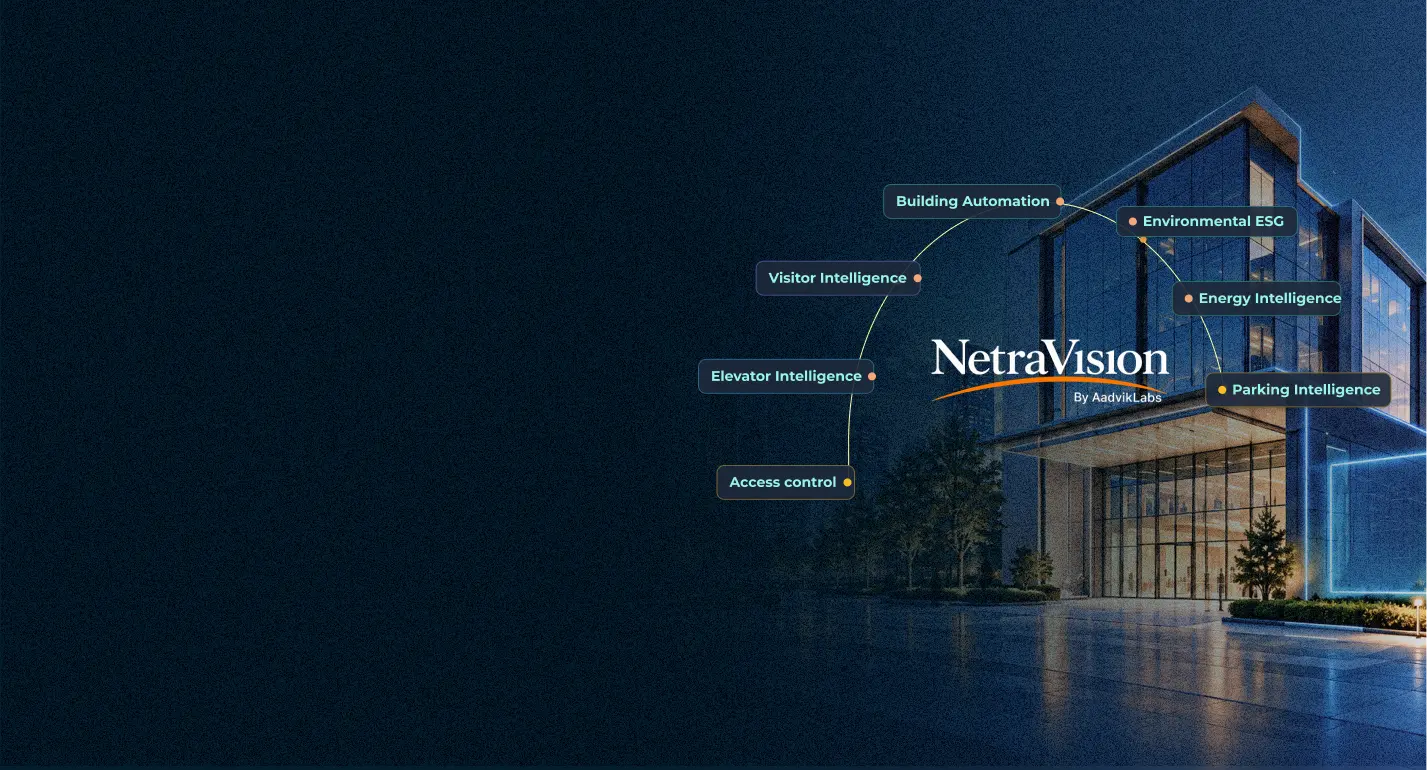
Computer vision delivers its greatest ROI when it is integrated directly into the physical building management system (BMS). Detecting people in a conference room should automatically inform HVAC airflow and lighting controllers. Recognizing an authorized license plate at the boom barrier should verify parking stall availability and guide the driver seamlessly.
This synthesis between computer vision and IoT telemetry bridges physical security and sustainable facility management, transforming disparate building subsystems into a synchronized, energy-efficient ecosystem.
Designing vision systems that scale reliably
Deploying computer vision across campuses, commercial towers, and industrial plants requires engineering for varied lighting conditions, reflections, seasonal weather, and optical camera drift. Models must be resilient against false alerts and calibrated for specific camera angles.
Enterprise vision systems need centralized fleet orchestration: remote model updates, telemetry monitoring, and transparent override controls that keep human facility managers firmly in command.
Keep exploring with Aadvik.
Explore NetraVision Platform